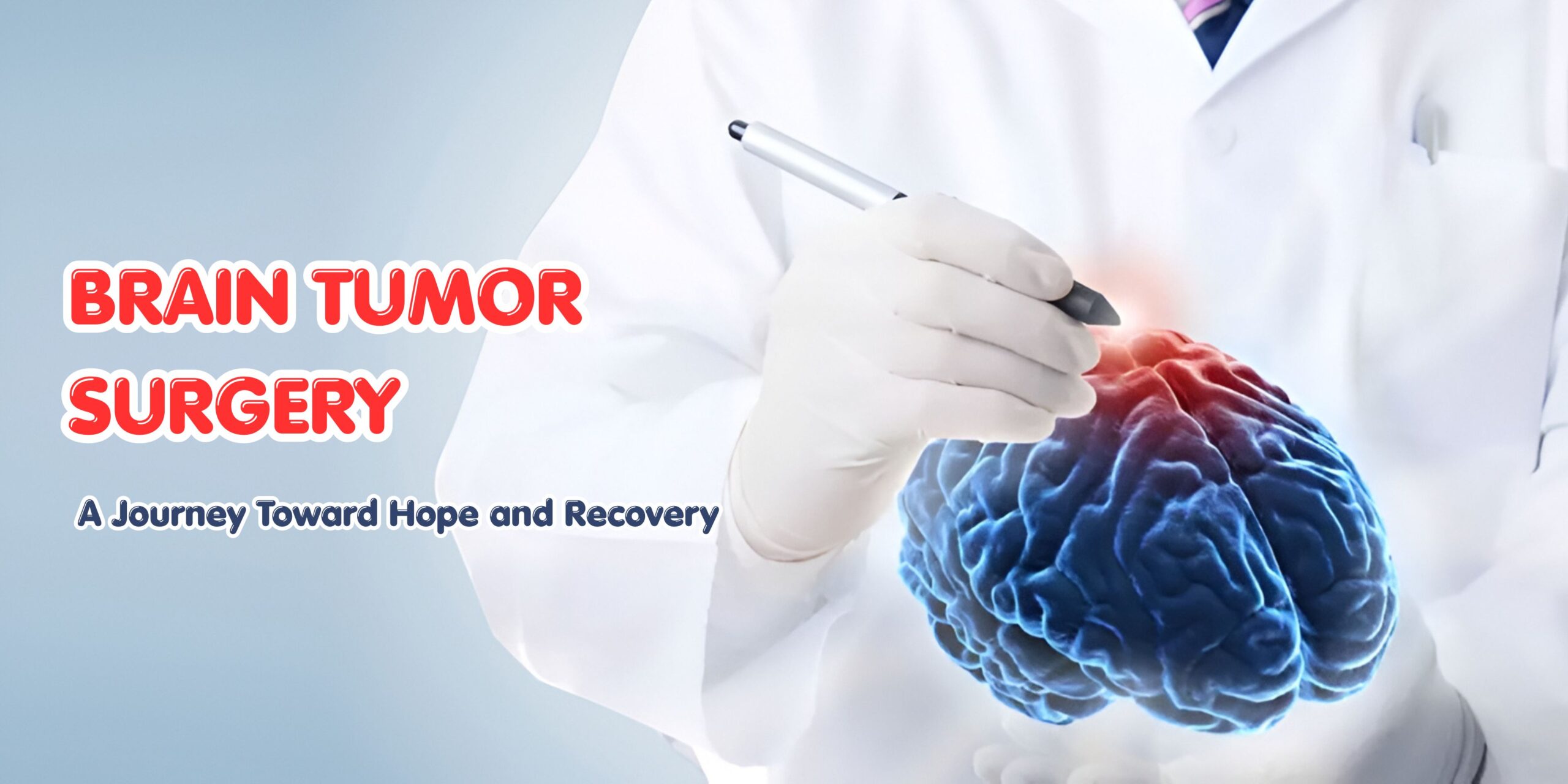
Brain tumor surgery (craniotomy) is a specialized surgical procedure performed under general anesthesia to maximize the removal of a brain tumor while carefully preserving vital neurological functions like speech, vision, and movement. Guided by high-resolution 3D brain-mapping and real-time GPS-like neuronavigation systems, a neurosurgeon creates a scalp incision and temporarily removes a small piece of the skull bone to safely access and resect the abnormal tissue. To differentiate tumor borders from healthy brain matter, modern surgeons often utilize advanced technologies like intraoperative MRIs and fluorescence-guided dyes that cause tumor cells to glow under specific light. Once the tumor is removed to alleviate intracranial pressure, the bone flap is permanently resecured with tiny titanium plates, and the patient is closely monitored in a specialized neurological ICU for the first 24 to 48 hours to track reflex and cognitive recovery.
Why is brain tumor surgery in India more affordable than in many other countries?
Brain tumor surgery is significantly more affordable in India primarily because of lower operational costs, specialized domestic manufacturing, and a highly competitive, high-volume healthcare ecosystem. Unlike in Western nations, clinical infrastructure overheads—including neurosurgeon fees, highly trained nursing staff salaries, and advanced operating theater utilization charges—are a fraction of the cost. Additionally, leading Indian hospitals achieve substantial economies of scale by treating thousands of international and domestic patients annually, allowing them to offer discounted, all-inclusive corporate packages that bundle complex pre-op 3D brain mapping, the craniotomy procedure, and intensive care stays into a single predictable invoice. This financial advantage is further enhanced by lower domestic pharmaceutical and medical equipment maintenance costs, alongside a favorable currency exchange rate that amplifies savings for global travelers.
How can patients reduce their brain tumor surgery expenses in India?
To significantly reduce brain tumor surgery expenses in India, patients can implement several strategic choices regarding location, hospital types, and treatment packages:
Choose Tier-2 Cities: Opting for advanced medical hubs in cities like Hyderabad, Pune, Kochi, or Ahmedabad instead of tier-1 metro hubs (like Mumbai or Delhi) can lower hospital room rents and procedural overheads by 20% to 30% [1].
Opt for Charitable or Government Institutes: For maximum affordability, patients can seek treatment at renowned trust-run or non-profit hospitals (like Tata Memorial Hospital or Sri Sathya Sai Institute) or premier public tertiary centers (like AIIMS), which offer highly subsidized neurosurgical care using state-of-the-art technology [2].
Demand Generic Neuro-Medications: Strictly request that the hospital pharmacy and discharging doctors prescribe generic equivalents rather than expensive branded alternatives for all post-operative antibiotics, anti-seizure medications, and pain management drugs.
Optimize Post-Op Recovery Inpatient Stays: Work closely with the medical team to safely transition from a premium private hospital room to home-based nursing care or local step-down rehabilitation facilities as soon as the acute monitoring phase is complete to avoid mounting daily room charges.
What is included in the total brain tumor surgery cost in India?
The total brain tumor surgery package cost in India generally includes all essential medical expenses from the day of admission to discharge, specifically bundling pre-operative 3D brain mapping (such as specialized MRIs or CT scans), neurosurgeon and anesthesia team fees, and the main craniotomy operating theater charges. It covers all specialized surgical consumables, advanced intraoperative technologies like real-time neuronavigation, and a pre-allocated number of days in the Neurological Intensive Care Unit (NICU) followed by a standard private room stay. Additionally, baseline laboratory tests, post-operative nursing care, initial physiotherapy sessions, and standard hospital-dispensed medications required during the stay are fully integrated into this single, upfront corporate rate.
Which hospitals offer cost-effective brain tumor surgery in India?
Cost-effective brain tumor surgery in India is widely available across several leading multi-specialty hospital networks, premier charitable trusts, and government-backed medical institutes that provide world-class neurosurgical care at highly competitive rates. Prominent private hospital networks like Apollo Hospitals, Max Healthcare, and Fortis Healthcare offer structured, all-inclusive neuro-oncology surgery packages that utilize advanced neuronavigation systems at a fraction of Western costs. Additionally, major public-sector tertiary referral centers such as the All India Institute of Medical Sciences (AIIMS) and Post Graduate Institute of Medical Education and Research (PGIMER) deliver exceptionally affordable craniotomies performed by highly experienced neurosurgeons using state-of-the-art operative technology.
How do the type and complexity of a brain tumor impact surgery costs in India?
The type and complexity of a brain tumor directly dictate the surgery cost in India by determining the advanced technologies, surgical precision, and operating room time required for a safe resection. Simple, benign tumors located on the surface of the brain (like small meningiomas) require standard craniotomy protocols, resulting in lower base costs. Conversely, complex malignancies—such as deep-seated glioblastomas, skull-base tumors, or those wrapped around vital blood vessels and cranial nerves—exponentially increase expenses. These intricate cases demand premium intraoperative technologies, including fluorescence-guided dyes (like 5-ALA) for tumor boundary mapping, real-time neuronavigation, intraoperative MRI scans, and specialized micro-ultrasonic aspirators. Furthermore, tumors located near crucial speech or motor centers may require an awake craniotomy with continuous neuro-monitoring, a highly specialized procedure that involves extra clinical experts, extends the surgical duration, and requires longer post-operative stays in the Neurological Intensive Care Unit (NICU).
Conclusion:
In conclusion, brain tumor surgery is a vital, highly sophisticated intervention that serves as the cornerstone of neuro-oncological care, effectively relieving intracranial pressure, establishing precise diagnoses, and extending patient survival. By combining the exceptional skill of internationally trained neurosurgeons with cutting-edge technologies like real-time neuronavigation, awake craniotomies, and intraoperative imaging, modern procedures prioritize maximum tumor removal while strictly preserving essential cognitive and motor functions. Ultimately, selecting an optimal healthcare facility—such as India’s highly cost-effective, JCI-accredited medical hubs—allows patients to safely navigate this complex journey, securing world-class clinical outcomes and a clear path toward long-term neurological recovery and improved quality of life.