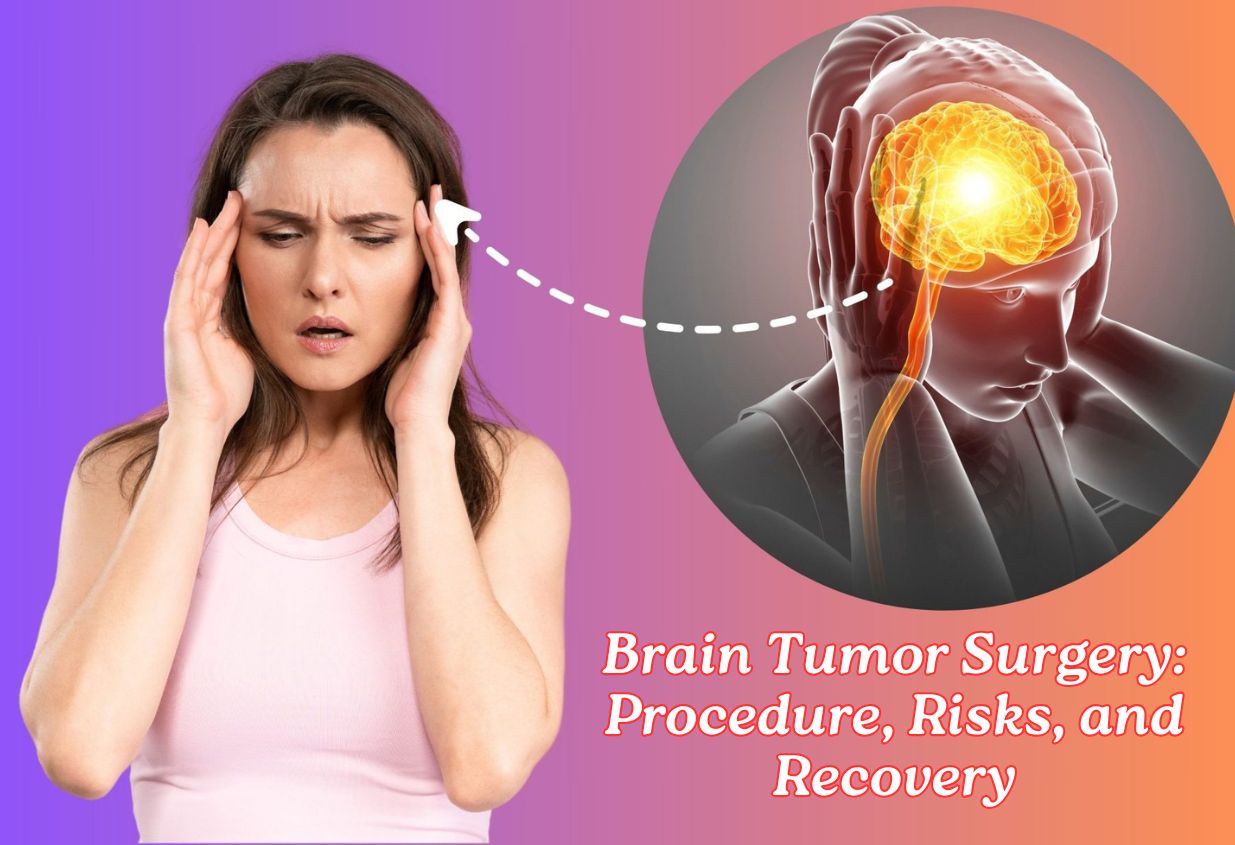
What Is Brain Tumor Surgery?
Brain tumor surgery is a medical procedure aimed at removing tumors located in the brain. This operation can involve the complete excision of the tumor or a partial resection, depending on its size, type, and location. The primary goal of the surgery is to alleviate symptoms, improve neurological function, and, when possible, eliminate the tumor to prevent further complications. The procedure is typically performed by a neurosurgeon and may be accompanied by advanced imaging techniques to enhance precision and safety during the operation.
Types of Brain Tumors Treated with Surgery
1. Benign (Non-Cancerous) Tumors
Meningiomas: Often fully curable through surgical removal.
Pituitary Adenomas: Usually removed via minimally invasive Endoscopic Endonasal surgery (through the nose).
Acoustic Neuromas: Surgery prevents pressure on the brainstem and preserves hearing.
Craniopharyngiomas: Complex tumors near the pituitary gland requiring precision resection.
2. Malignant (Cancerous) Tumors
Glioblastomas (GBM): Surgery aims to “debulk” the tumor to reduce pressure before radiation/chemo.
Astrocytomas/Gliomas: Surgery is used to remove the core mass and determine the tumor’s grade.
Medulloblastomas: Fast-growing childhood tumors typically requiring immediate surgical intervention.
3. Metastatic (Secondary) Tumors
Brain Metastases: Cancers that spread from the lungs, breast, or colon. Surgery is performed on large, accessible lesions to alleviate symptoms.
2025 Surgical Methods
Awake Craniotomy: Patient is awake to ensure speech and motor skills are preserved during removal.
Neuro-Navigation: “GPS-like” technology used for millimeter-precise tumor targeting.
Laser Ablation (LITT): Minimally invasive heat treatment for deep-seated tumors.
When Is Brain Tumor Surgery Recommended?
Brain tumor surgery is typically recommended when the tumor is causing significant symptoms, such as persistent headaches, seizures, or neurological deficits, which may indicate increased intracranial pressure or disruption of normal brain function.
Additionally, surgical intervention is often considered when imaging studies, such as MRI or CT scans, reveal a tumor that is accessible and can be safely removed without posing excessive risk to surrounding healthy brain tissue. The decision to proceed with surgery also depends on the tumor’s type, size, and location, as well as the patient’s overall health and preferences.
Step-by-Step Brain Tumor Surgery Procedure
Step 1: Pre-Surgical Preparation
Imaging: High-resolution MRI or fMRI (functional MRI) creates a 3D “map” of the brain to locate the tumor and nearby critical zones (speech/movement).
Anesthesia: General anesthesia is administered so the patient is unconscious. In Awake Craniotomies, the patient is awakened during the procedure to test language and motor functions in real-time.
Positioning: The head is secured in a specialized three-pin frame (e.g., Mayfield clamp) to ensure zero movement.
Step 2: Accessing the Brain (The Craniotomy)
Incision: A scalp incision is made, usually behind the hairline to minimize scarring.
Bone Flap Removal: Neuro Surgeons use a specialized drill (craniotome) to remove a section of the skull, known as a bone flap, which is preserved to be replaced later.
Opening the Dura: The protective membrane of the brain (dura mater) is carefully cut and folded back to reveal the brain tissue.
Step 3: Tumor Localization and Removal
Neuronavigation: Like a GPS for the brain, real-time computer systems guide the surgeon to the exact millimeter of the tumor.
Monitoring (IONM): Real-time Intraoperative Neurophysiological Monitoring tracks nerve activity to prevent paralysis or speech loss.
Fluorescence Guidance: Patients may ingest a dye (like 5-ALA) that makes tumor cells glow under blue light, helping surgeons distinguish them from healthy tissue.
Resection Tools: Ultrasonic aspirators (CUSA) break up the tumor with high-frequency sound waves, while suction gently removes the fragments.
Step 4: Closure
Bone Replacement: Once the tumor is removed, the bone flap is repositioned and secured with tiny titanium plates and screws.
Suturing: The scalp is stitched or stapled back together, and a sterile bandage is applied.
Step 5: Immediate Recovery
ICU Stay: Patients are typically monitored in a Neuro-ICU for the first 24–48 hours to check for swelling or seizures.
Imaging Check: A post-operative MRI is often performed within 48 hours to confirm the extent of removal.
Risks and Possible Complications of Brain Tumor Surgery
Brain tumor surgery carries inherent risks and potential complications that patients should be aware of prior to the procedure. These may include infection, bleeding, and adverse reactions to anesthesia, which can complicate recovery. Additionally, there is a possibility of neurological deficits, such as changes in vision, speech, or motor function, depending on the tumor’s location and the extent of the surgery.
Post-operative complications may also arise, necessitating further medical intervention. It is crucial for patients to discuss these risks with their healthcare team to make informed decisions regarding their treatment options.
Recovery Timeline After Brain Tumor Surgery
The recovery timeline following brain tumor surgery can vary significantly among individuals, influenced by factors such as the tumor’s type, location, and the patient’s overall health. Typically, patients may experience a range of symptoms during the initial recovery phase, including fatigue, headaches, and cognitive changes.
Most individuals are monitored closely in the hospitals for a few days post-surgery, after which they may transition to home care or rehabilitation services. Full recovery can take several weeks to months, with ongoing follow-up appointments to assess neurological function and manage any potential complications. It is essential for patients to adhere to their healthcare provider’s recommendations during this period to facilitate optimal recovery.
Conclusion
Brain tumor surgery is a critical intervention that can significantly impact a patient’s prognosis and quality of life. The decision to proceed with surgery is often based on various factors, including the tumor’s type, size, location, and the overall health of the patient. Successful surgical outcomes can lead to the removal of the tumor, alleviation of symptoms, and improved neurological function. Ultimately, a thorough discussion between the medical team and the patient is vital to ensure informed decision-making and to set realistic expectations regarding the surgery’s benefits and challenges.
References:
https://www.hopkinsmedicine.org/health/conditions-and-diseases/brain-tumor/brain-tumor-surgery